
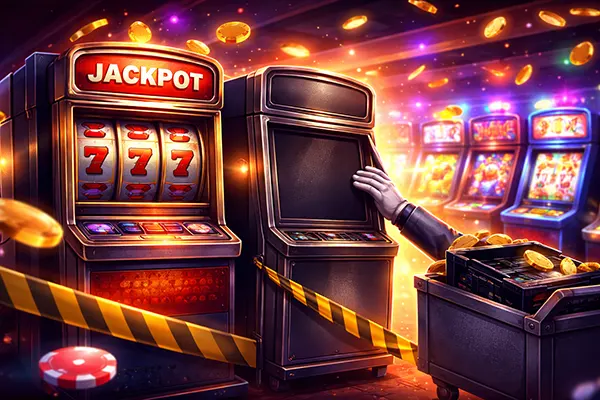
Why Some Slots Disappear from Casinos and What It Means for Players
Players often notice that familiar slot titles suddenly vanish from a casino’s catalogue. This can happen without announcements or clear explanations, leading to confusion and speculation. In reality, the removal of slots is a normal process influenced by technical, legal, and commercial factors. Understanding why games disappear helps players make more informed decisions and better manage expectations.
Licensing, Regulation, and Legal Compliance
One of the most common reasons for slot removal is regulatory change. Gambling laws evolve regularly, especially in regulated markets such as the UK and the EU. When new requirements are introduced, certain games may no longer meet updated technical or legal standards. Casinos are obligated to remove such titles immediately to remain compliant.
Licensing agreements between casinos and game developers also have fixed terms. If a licence expires and is not renewed, the casino must stop offering those slots. This does not necessarily indicate a problem with the game itself; it often reflects commercial negotiations or changes in strategic focus.
Additionally, some jurisdictions introduce limits on game mechanics, such as autoplay features, bonus rounds, or volatility settings. Slots that cannot be easily adapted to these rules are more likely to be withdrawn rather than redesigned.
Impact of Responsible Gambling Regulations
Since 2020, regulators have increased scrutiny of slot design to reduce gambling-related harm. This includes restrictions on spin speed, visual effects, and bonus frequency. Games created under older standards may fail to comply with newer responsible gambling rules.
For developers, updating legacy titles can be costly and technically complex. As a result, some studios choose to retire older games instead of investing resources into reworking them. Casinos then remove these titles from their libraries.
For players, this shift generally leads to a safer and more transparent playing environment, even if it means losing access to well-known slots from the past.
Technical Performance and Game Popularity
Slots are also removed based on performance metrics. Casinos closely monitor how often games are played, how long sessions last, and how much revenue each title generates. Games with consistently low engagement are often phased out.
Technical compatibility plays a role as well. Older slots may not function optimally on modern devices or updated casino systems. Issues such as slow loading times, mobile incompatibility, or software bugs can prompt removal.
As new games are released every month, casinos must balance variety with usability. Removing outdated or unpopular slots helps maintain a streamlined and efficient game catalogue.
Evolution of Player Preferences
Player expectations have changed significantly in recent years. Modern slots often feature advanced graphics, interactive bonus mechanics, and higher production values. Older titles may struggle to compete for attention.
Data from 2024–2025 shows that players increasingly favour slots with transparent RTP information and innovative features. Games lacking these elements tend to see declining interest.
When casinos adjust their selection to match current preferences, the overall playing experience improves, even if it means saying goodbye to less relevant titles.

Business Decisions and Provider Strategies
Slot removal is sometimes driven by strategic decisions from game providers themselves. Studios may discontinue titles to focus on new releases, rebrand their portfolio, or align with updated corporate goals.
Mergers and acquisitions within the gaming industry can also affect availability. When companies merge, overlapping game libraries are often consolidated, leading to the retirement of certain slots.
In some cases, providers limit distribution of specific games to selected partners, reducing their presence across multiple casinos.
What Slot Removal Means for Players
For players, disappearing slots are usually not a sign of unfair practice. Balances, bonuses, and winnings are not affected by the removal of a game, as casinos handle these changes at system level.
However, players who favour specific titles should be aware that availability is never guaranteed long-term. Keeping an eye on new releases from preferred developers can help identify suitable alternatives.
Overall, slot rotation reflects an industry that adapts to regulation, technology, and player behaviour. While change can be inconvenient, it often results in a more secure, modern, and responsible gaming environment.